


This piece is not aimed at families who already feel confident about their child’s academic ability and the options ahead.
It is for parents who are going through a more uncertain phase with their child—when results are still pending and the next step has not yet taken shape.
As the 2026 high school graduation exam approaches, conversations everywhere revolve around university admissions, benchmark scores, subject combinations, academic records, and various assessment methods.
There is no shortage of information. In fact, there are more options than ever before. Yet for many families, the decision has not become easier.
The difficulty is not a lack of choices, but deciding which path genuinely suits their child.
And the same question keeps coming up:
What happens if my child does not get into university?

The concern goes beyond the exam itself
For many parents, the real concern is not the exam result, but what comes immediately after.
If a student has no clear plan, spends too much time at home without structure, and lacks a learning environment or guidance, it is easy to lose direction. A short break can quickly turn into months of uncertainty.
At 18, having no clear daily purpose can be more worrying than an unexpected exam outcome.
This is why it is worth thinking not only about which university to apply to, but also about the environment your child will enter after the exam.
University is only one option
Many families are familiar with a conventional path: university, graduation, employment, stability.
In practice, this is just one of several possible routes.
The current system offers multiple admission methods and more flexibility than before. At the same time, there are viable alternatives outside university education.
Each student develops at their own pace. There is no single timeline that fits everyone.

If university does not happen immediately
Not entering university right away is not a dead end. It is a point to reassess and choose a more suitable direction.
Some students may:
-
Enrol in college or vocational programmes
-
Take time to prepare and sit the exam again with a clearer goal
-
Learn a trade and start working earlier
-
Move into a different learning environment
What matters is not how quickly they move, but whether they keep moving.
Avoid leaving the time after the exam unstructured
The issue is not missing university entry, but what follows if that time is left open.
The right environment can help a young person maintain a routine, stay engaged, and gradually understand their own strengths and preferences.
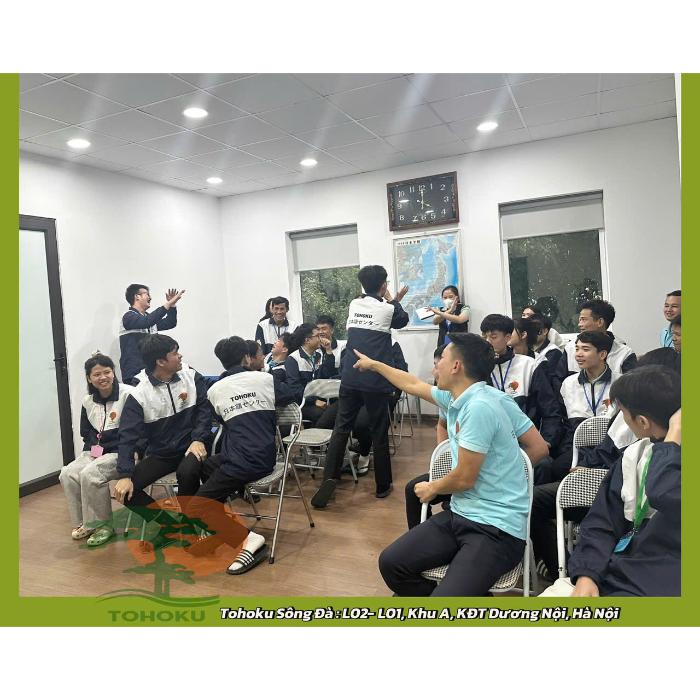
For this reason, some families consider study-abroad pathways that combine study with part-time work. Beyond language learning, these environments offer structure, responsibility, and exposure to real-life situations.
In some cases, what a student needs is not an immediate decision, but a period spent in the right setting.
Maturity is reflected in awareness
In the long run, the key question is not which institution a student attends, but how well they understand their own direction.
Do they know what they are doing, and why they have chosen that path?
Are they ready to take responsibility for their decisions?
Some follow a direct route but remain unsure. Others take a longer path and gain clarity along the way.
The difference lies in awareness, not in speed.
Conclusion
Gaining admission to university is, of course, a positive outcome.
But if that does not happen, it does not mean everything is delayed.
What matters most is ensuring that your child does not remain inactive after the 2026 graduation exam—and does not have to deal with uncertainty on their own.
At this stage, they need a next step that they can begin with confidence.
This could be:
-
Vocational training
-
Retaking the exam
-
Or entering a new environment such as studying abroad while working
There is no universal “right” choice.
There is only the path that suits your child—and allows them to keep moving forward.
Nếu bạn muốn, tôi có thể tối ưu thêm phiên bản này theo hướng “marketing mạnh hơn” (CTA rõ, dẫn về tư vấn của Tohoku Sông Đà) mà vẫn giữ giọng tự nhiên.