


For female technical intern trainees living and working in Japan, looking after their health is essential for maintaining a stable working life and adapting to life away from home. Shift work, changes in weather, irregular routines and reluctance to speak up when feeling unwell can all affect their health.
Here are seven important points to help female technical intern trainees take care of themselves while working in Japan.
1. Do not ignore unusual changes in your body
Persistent fatigue, dizziness, abdominal pain, difficulty sleeping, poor appetite or unusual weakness are symptoms that should not be ignored. If symptoms continue, recur or interfere with your work, seek medical attention.
Do not force yourself to endure discomfort simply because you are worried about inconveniencing others or affecting work progress.
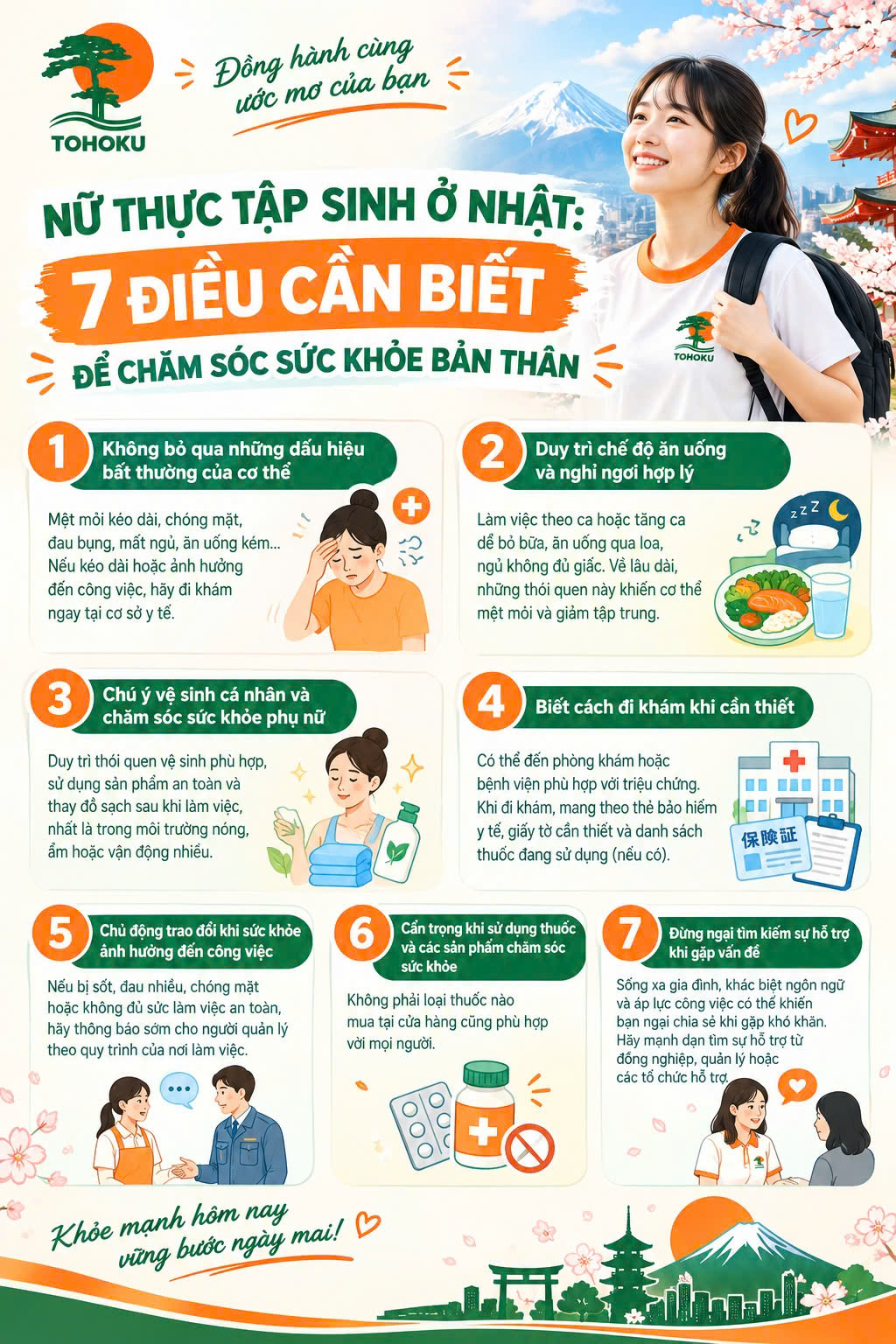
2. Maintain a balanced diet and get enough rest
Trainees who work shifts or regularly work overtime may skip meals, rely on convenience foods or fail to get enough sleep. Over time, these habits can lead to fatigue and reduced concentration.
Try to eat regular meals, include vegetables, fruit and protein-rich foods in your diet, drink enough water and make time for adequate rest according to your work schedule.
3. Maintain personal hygiene and pay attention to women’s health
Female trainees should maintain appropriate personal hygiene and use safe personal care products. Changing into clean clothes after work is also important, particularly when working in hot, humid environments or doing physically demanding jobs.
If you notice unusual changes in your menstrual cycle, severe abdominal pain, abnormal bleeding or other worrying symptoms, consult a healthcare professional. Avoid taking medication without proper advice or relying on unverified recommendations from others.
4. Know how to seek medical care when necessary
In Japan, you can visit a clinic or hospital depending on your symptoms. When attending an appointment, bring your health insurance information and any necessary documents. If you take medication, it is helpful to prepare a list of the medicines you use.
If you have difficulty communicating in Japanese, ask your workplace supervisor, supervising organisation or support organisation for help with communication at the medical facility. Explain your symptoms clearly, including when they started and how severe the pain or discomfort is.
5. Speak up when your health affects your ability to work
If you have a fever, severe pain, dizziness or other symptoms that make it difficult to work safely, inform your supervisor as soon as possible in accordance with workplace procedures.
This is particularly important for jobs involving machinery, prolonged standing, heavy lifting or high-temperature environments. Continuing to work when your health is not suitable for the task may put both you and your colleagues at risk.
If you need time off for medical appointments or treatment, explain your situation and follow the relevant procedures. Except in emergencies where immediate safety takes priority, do not take leave without notifying the appropriate person.
6. Be careful when using medicines and healthcare products
Not every medicine available in shops is suitable for everyone. Read the instructions carefully and check the precautions and contraindications before use. If you are taking other medication, have an existing medical condition or think you may be pregnant, consult a doctor or pharmacist.
Do not take someone else’s medication, increase the dosage in an attempt to recover more quickly or use products of uncertain origin that claim to treat health conditions.
7. Do not hesitate to ask for support when you need it
Living far from family, dealing with language differences and coping with work pressures can make some female trainees reluctant to discuss their difficulties. However, keeping every problem to yourself is not always the best way to resolve it.
When you need support, speak to your workplace supervisor, supervising organisation, sending organisation or a trusted family member. If you experience harassment, threats or inappropriate treatment, keep relevant messages and records, and seek help through an appropriate support channel.
In Japan, call 119 for an ambulance or the fire service in an emergency. Call 110 when you need police assistance.
Looking after your health means more than seeking treatment when you become ill. It also means recognising unusual symptoms early, maintaining healthy daily habits and seeking appropriate support when necessary. By taking care of yourself through small everyday habits, you can help maintain your health and work safely throughout your time in Japan.
CONTACT INFORMATION
Songda Tohoku Joint Stock Company
Address: L02-L01, Zone A, Duong Noi Urban Area, Duong Noi Ward, Hanoi, Vietnam
Hotline: 0989 044 852 / 0989044852
Email: tohokusongda2014@gmail.com
Website: https://tohoku.vn