


When preparing to study in China, students need to think beyond university admission, accommodation and visa procedures. Knowing how to make everyday payments is also an important part of preparing for life in China.
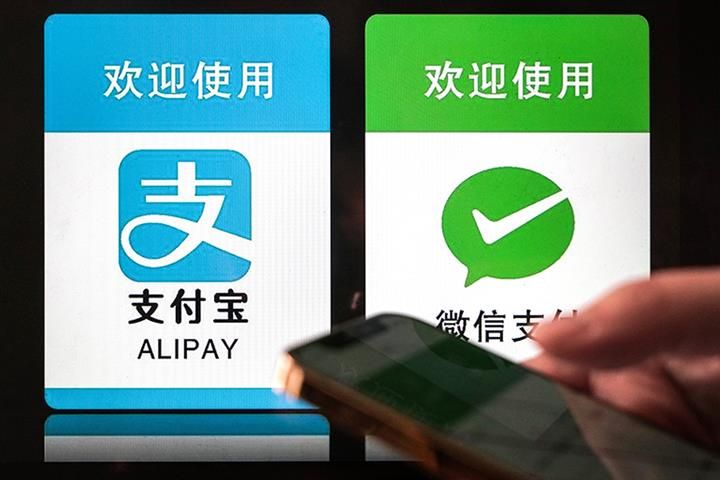
Mobile and QR-code payments are widely used across China for everyday activities such as shopping, dining, transport and food delivery. Among the most commonly used platforms are WeChat Pay and Alipay.
For Vietnamese students planning to study in China, setting up these payment methods before departure can make the first few weeks much easier.
How Important Are WeChat and Alipay in Everyday Life in China?
Mobile payments are widely integrated into everyday life in China.
WeChat is not only a messaging and social networking platform but also provides WeChat Pay, which can be used for shopping, dining, transport and many other everyday services.
Alipay is another widely used payment platform. It supports a broad range of services, including shopping, food, transport and other daily transactions.
For international students staying in China for an extended period, having both WeChat and Alipay can provide greater flexibility and a useful backup option.
Can Vietnamese Students Use WeChat and Alipay in China?
Yes. Foreign nationals can register for WeChat and Alipay and, subject to the relevant requirements, link eligible international bank cards to their accounts.
Current Chinese government guidance states that foreign nationals can register WeChat, Alipay and other payment apps using either overseas or Chinese mobile phone numbers. Eligible international cards, including Visa, Mastercard, UnionPay, American Express, JCB, Diners Club and Discover, can be linked to supported payment services.
However, the supported card types, transaction limits and applicable fees may vary between payment services. Students should therefore check the latest information shown in the relevant app before using it.
Can Vietnamese Bank Cards Be Used for Payments in China?
Vietnamese bank cards can be used in China if they are eligible for international transactions and can be linked to a supported payment service.
However, this does not mean that every Vietnamese bank card will automatically work with WeChat or Alipay.
When linking a card, the issuing bank may need to verify the transaction or connection. If the card cannot be linked, students should contact their Vietnamese bank or the customer service team of the relevant payment platform.
Before travelling to China, it is advisable to check:
-
Whether international transactions are enabled
-
Whether the card can be used in China
-
Whether the card can be linked to WeChat or Alipay
-
Foreign exchange and international transaction fees
-
Daily or monthly spending limits
-
What to do if a payment is declined
Should Students Use WeChat or Alipay?
For international students, it is generally better to have both WeChat and Alipay rather than relying on only one payment platform.

WeChat is particularly useful for communication with Chinese friends, teachers and other contacts, as well as for everyday payments.
Alipay provides access to a wide range of everyday services and is also widely used for shopping, transport and other transactions.
Having both apps gives students an alternative payment method if one service temporarily becomes unavailable.
Do You Need to Carry Cash When Travelling to China?
Although mobile payments are widely used in China, students should still carry a small amount of RMB cash when they first arrive.
Cash can be useful when:
-
Your phone battery runs out
-
You have no internet connection
-
An app requires additional verification
-
A card or mobile payment service is temporarily unavailable
-
You visit a place where cash payment is still accepted
There is no need to carry all of your living expenses in cash. A combination of cash, bank cards and mobile payment methods is generally more practical.
Foreign nationals can also exchange foreign currency for RMB through eligible banks and authorised financial institutions in China.
Should You Exchange RMB Before Leaving Vietnam?
It is advisable to prepare some RMB before departure so that you have cash available immediately after arriving in China.
However, students do not need to exchange their entire year's living expenses into RMB before travelling.
It is more practical to divide your funds according to their purpose, such as accommodation, tuition fees, daily expenses and emergency funds. This makes it easier to manage your budget throughout your studies.
Do You Need to Open a Chinese Bank Account?
Not necessarily when you first arrive.
If your international bank card can be successfully linked to WeChat or Alipay, you may be able to use mobile payments while completing your initial settling-in procedures.
For students staying in China long term, however, opening a Chinese RMB bank account can be useful for managing money and accessing certain domestic services.
Current Chinese government guidance allows foreign nationals to apply for a bank card at commercial banks using valid identification documents such as a passport. Specific requirements may vary between banks.
When Should You Open a Chinese Bank Account?
There is usually no need to open a Chinese bank account on your first day.
Students can first focus on:
-
Completing university registration
-
Arranging accommodation
-
Getting a Chinese mobile phone number where necessary
-
Setting up WeChat and Alipay
-
Getting familiar with their new surroundings
Once these basic arrangements are complete, students can decide whether opening a Chinese bank account would be useful.
For long-term students, having a Chinese bank account may make it easier to manage RMB funds and use certain domestic services.
Are There Fees for Paying with an International Bank Card?
Students should not assume that there is one fixed fee for every international card transaction.
Fees and conditions can vary depending on the payment platform, card type, transaction and current service terms. Chinese government guidance also states that supported card brands, payment limits and fees may vary between payment products.
Before travelling, students should therefore check both the latest terms of WeChat and Alipay and the overseas transaction fees charged by their Vietnamese bank.
What Should You Do If a Payment Does Not Go Through?
Payment problems can occasionally occur when using international cards or mobile payment apps in China.
Common issues include:
-
The bank card cannot be linked
-
The issuing bank does not approve the verification
-
Additional identity verification is required
-
The transaction exceeds the applicable limit
-
The Vietnamese bank blocks the transaction
-
There is a problem with the phone or internet connection
For this reason, students should always have at least one backup payment method, such as RMB cash, another bank card or the alternative payment app.
If a card cannot be linked or a payment fails repeatedly, contact the payment platform's customer service or the issuing bank for assistance.
How Should International Students Manage Their Money in China?
Students should avoid keeping all their money in one place or relying on only one payment method.
A practical approach is to divide funds between:
-
A small amount of RMB cash
-
A Vietnamese bank account and international bank card
-
WeChat Pay
-
Alipay
-
A Chinese bank account, if one is opened
This approach reduces the impact of a problem with any single payment method.
It is particularly useful to keep some cash and a backup bank card rather than relying entirely on a smartphone.
What Do Students Commonly Pay for Using Their Phones?
During their studies in China, international students may use mobile payments for many everyday expenses, including:
-
Restaurants and cafés
-
Convenience stores and supermarkets
-
Food delivery
-
Ride-hailing services
-
Public transport and related services
-
Online shopping
-
Daily necessities
-
Other everyday services
Chinese government guidance also recognises mobile payment as an important payment method for a wide range of everyday consumption scenarios.
Should You Transfer All Your Living Expenses to China at Once?
In most cases, it is better to manage your money in stages rather than transferring or carrying your entire living budget at once.
Students can divide their finances into tuition fees, accommodation, monthly living expenses, transport costs and emergency funds.
Managing money across several payment methods and accounts can also reduce the risk of losing access to all available funds if one account or payment service encounters a problem.
Should You Let Someone Else Use Your WeChat or Alipay Account?
No. Students should not lend their WeChat or Alipay accounts to other people.
These accounts may contain personal information and payment details. Students should therefore:
-
Never share passwords
-
Never share SMS verification codes
-
Avoid making transactions on behalf of unknown individuals
-
Be cautious when scanning unfamiliar QR codes
-
Avoid clicking suspicious links sent by unknown users
Keeping payment accounts secure is particularly important when living abroad.
Payment Checklist for Vietnamese Students Before Travelling to China
Before leaving Vietnam, students preparing to study in China should check the following:
□ Install WeChat
□ Install Alipay
□ Register and complete the required verification
□ Check whether your Vietnamese bank card can be linked
□ Enable international transactions where necessary
□ Check overseas transaction and foreign exchange fees
□ Check your card's spending limits
□ Prepare some RMB cash
□ Prepare a backup bank card or alternative payment method
□ Save your Vietnamese bank's customer service contact details
□ Check WeChat and Alipay support information
□ Never share your password or verification codes
Studying in China: Preparing Your Payment Methods Is Just as Important as Preparing Your Money
Life in China is increasingly supported by mobile payments, so international students should prepare their payment methods before leaving Vietnam rather than simply bringing money with them.
Setting up WeChat and Alipay in advance, checking whether your Vietnamese bank card can be linked, and preparing a small amount of RMB cash can make the transition to life in China much smoother.
After settling in, students can consider opening a Chinese bank account if they expect to stay for a longer period or need additional domestic banking services.
Using WeChat, Alipay, bank cards and cash together provides a practical and flexible approach to managing money during your studies in China.
CONTACT INFORMATION
SONG DA TOHOKU JOINT STOCK COMPANY
Address: L02-L01, Khu A, KĐT Dương Nội, Phường Dương Nội, Hà Nội, Vietnam
Hotline: 0989 044 852
Email: tohokusongda2014@gmail.com
Website: tohoku.vn