


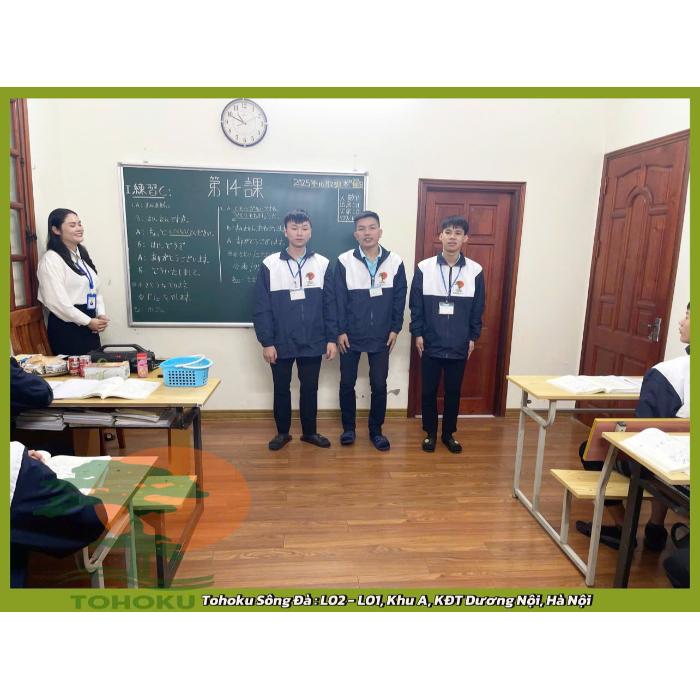
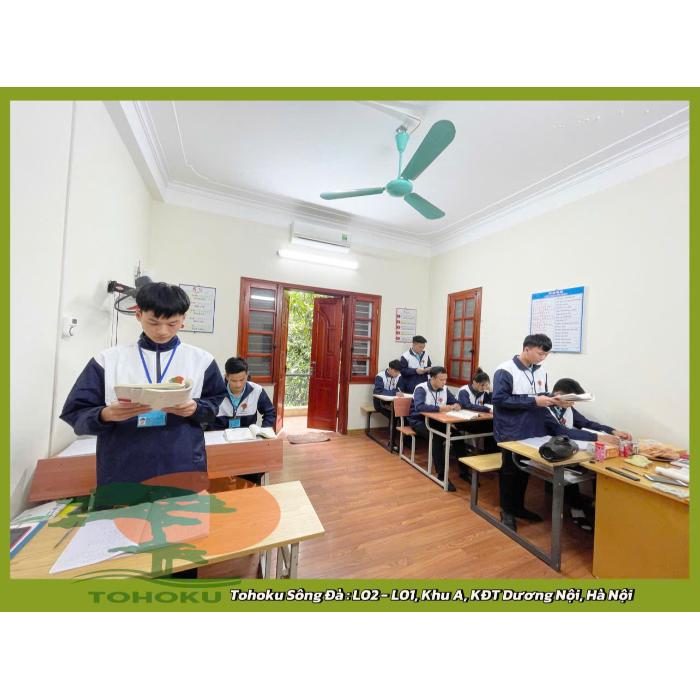
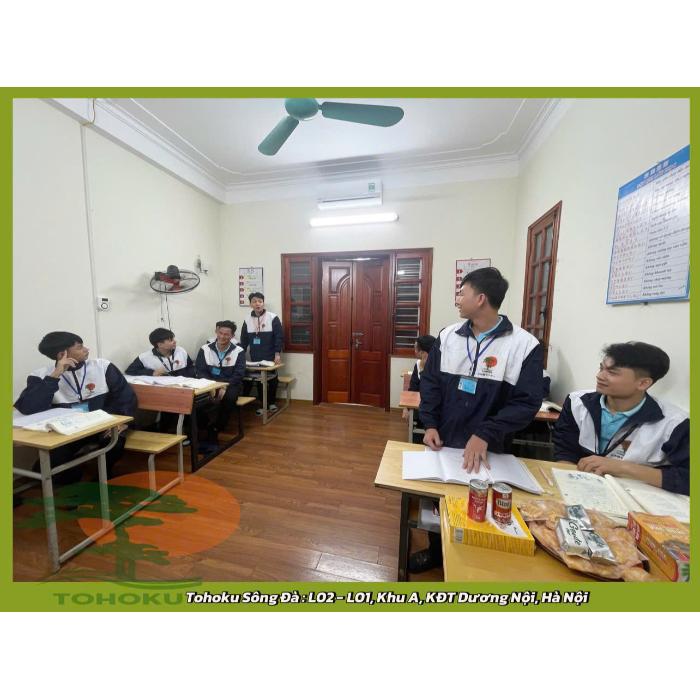
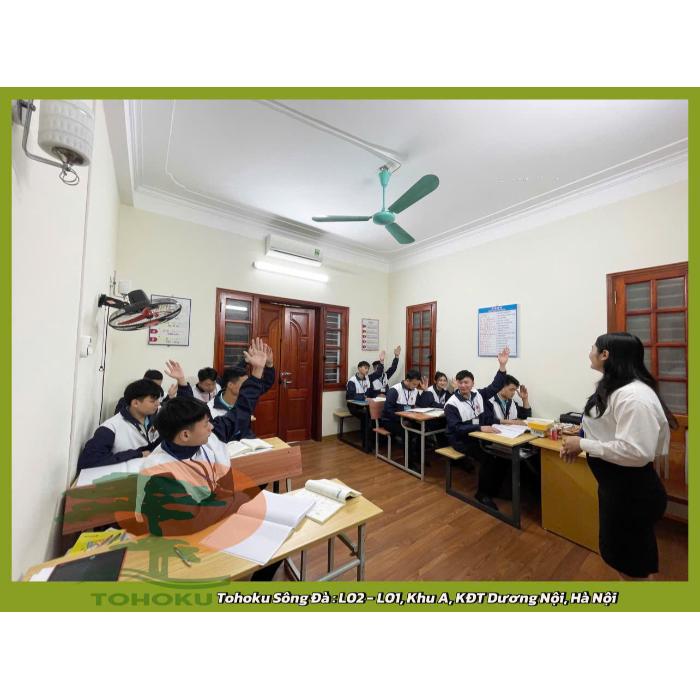
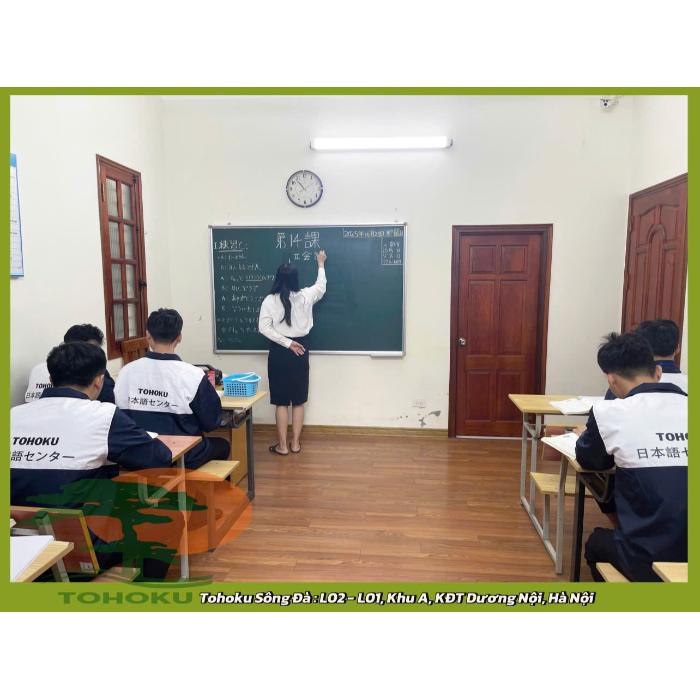
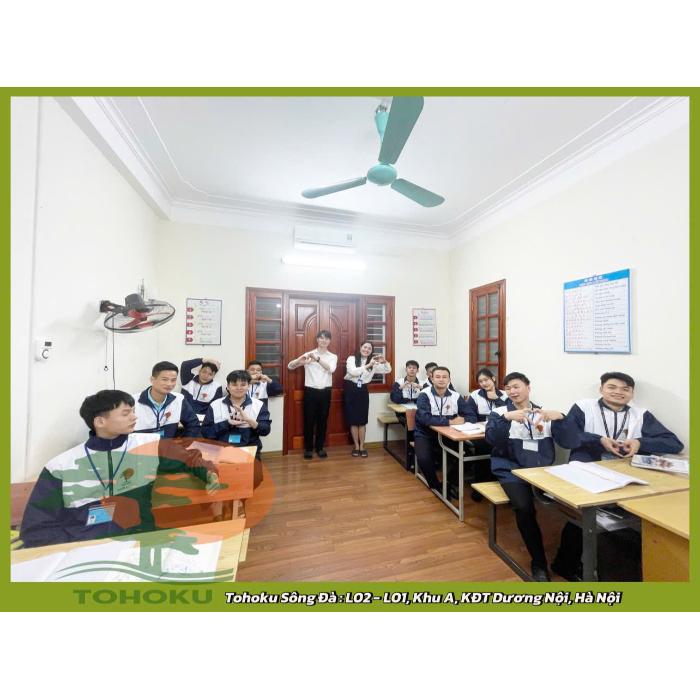
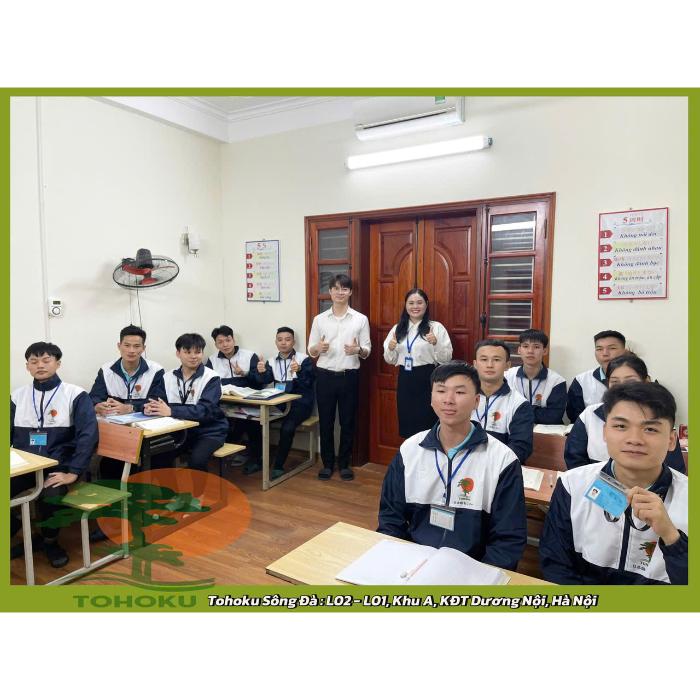
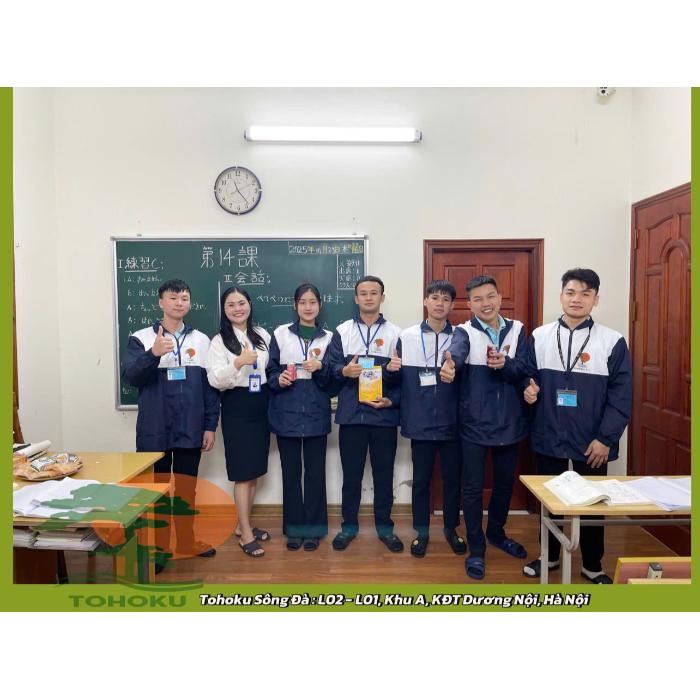
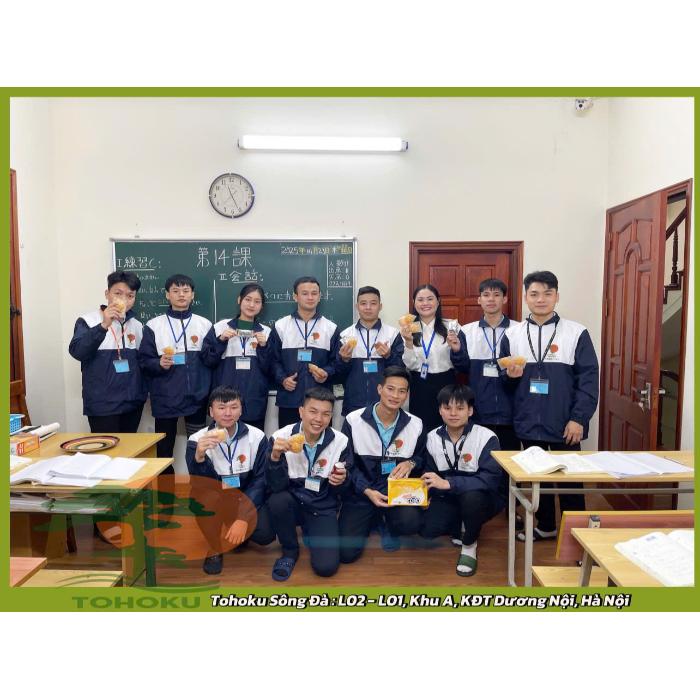
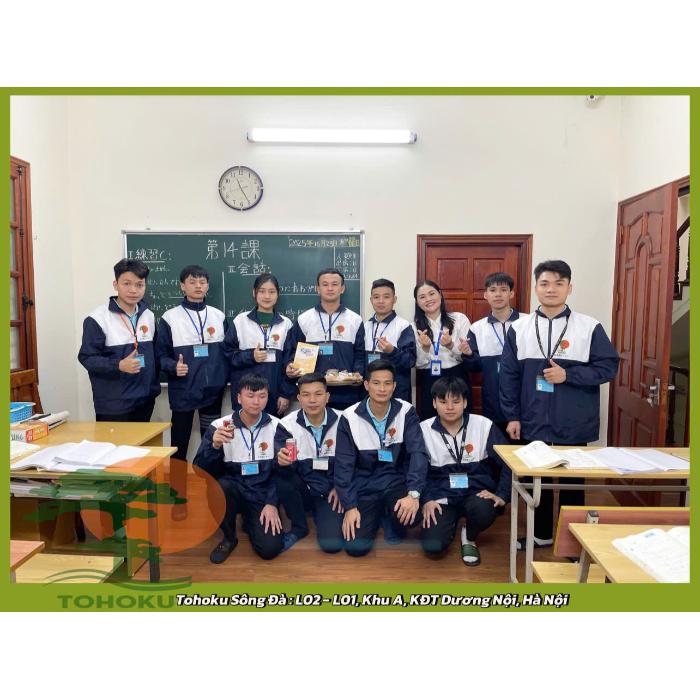
The Kaiwa (daily Japanese conversation) classes at Tohoku Sông Đà are truly practical and engaging, delivered with enthusiasm by our trainees.
At Tohoku, every school day is designed to be productive, enjoyable, and meaningful for each learner. Through interactive learning methods, students are encouraged to actively participate, express themselves confidently, and support one another in improving their communication skills.
Below is a glimpse of a Kaiwa session in Ms. Dinh’s class, where trainees are fully immersed in dialogue practice. By engaging in real-time conversations, they effectively strengthen their listening and speaking abilities — the two most essential skills for successful communication and workplace integration in Japan.
These sessions not only enhance language proficiency but also prepare students for real-life situations they will encounter in Japan.
WHAT IS KAIWA (会話) AND WHY IS IT ESSENTIAL?
Kaiwa (会話) in Japanese means “conversation” or “verbal communication.” The word is formed from two kanji characters:
-
会 (kai) – “to meet”
-
話 (wa) – “to talk”
Therefore, Kaiwa refers to a conversation between two or more people.
Why Is Kaiwa Training Necessary?
Kaiwa is not simply the ability to “speak.” It is the capacity to interact, respond naturally, and use Japanese effectively in real-life communication contexts. To practice Kaiwa properly, learners must develop several core competencies:
1. Listening Comprehension
The ability to accurately understand what the other person is saying in order to provide an appropriate response. Without strong listening skills, communication cannot be sustained.
2. Pronunciation and Intonation
Clear pronunciation and natural intonation ensure that your message is conveyed accurately and understood correctly. In Japanese, pitch accent plays a crucial role in meaning.
3. Vocabulary and Grammar
A solid foundation in grammar and sufficient vocabulary is essential for constructing sentences and expressing ideas logically and coherently.
4. Reflex and Response Speed
Effective conversation requires quick thinking and timely responses to maintain the natural flow of dialogue.
5. Communication Culture
In Japanese, understanding communication etiquette is especially important. This includes the proper use of Keigo (敬語 – honorific language), expressions of respect, and non-verbal elements such as gestures and eye contact. These cultural factors significantly influence whether a conversation feels smooth and appropriate.
Whether you are preparing to work in Japan, communicate in a professional environment, or simply watch anime without subtitles, Kaiwa is an indispensable skill.
Without consistent Kaiwa practice, you will struggle to communicate effectively, express your ideas clearly to Japanese speakers, or respond confidently in real-time conversations. Mastering Kaiwa is not optional—it is fundamental to true language proficiency.
For more details of our study abroad and working overseas program, please contact:
TOHOKU SONG DA JOINT STOCK COMPANY
Address: No. 4, Alley 180 Thai Thinh Street, Dong Da Ward, Hanoi, Vietnam
Hotline: 0989 044 852
Email: tohokusongda2014@gmail.com