


1. Standing at a crossroads
At the end of Grade 12, not every student has a clearly defined path. For those with average academic performance, the pressure is often not about getting into a top university, but about navigating multiple uncertain options.
You may be weighing whether to continue studying, pursue vocational training, or look for a more practical alternative. This sense of uncertainty can make decision-making difficult, but it is also the right moment to take a step back and seriously consider your future direction.

2. What truly matters: a clear and suitable pathway
In reality, many students today no longer see university admission as the only goal. Instead, their priorities are shifting towards more practical considerations:
-
Is the study pathway clearly structured?
-
Are there realistic job opportunities after graduation?
-
Are the time and financial commitments reasonable?
The key is not choosing the “best” institution, but identifying the pathway that best aligns with your abilities and long-term goals.
3. Rethinking ability from a different perspective
Average academic performance does not fully reflect a student’s potential. In many cases, it simply indicates a mismatch with traditional academic environments.
Students in this group often possess valuable strengths:
-
Strong adaptability
-
Persistence in practical, hands-on work
-
The ability to develop quickly in skill-based training environments
On the other hand, challenges often arise in:
-
Long-term theoretical study
-
Exam pressure
-
Lack of early career orientation
This means that the right environment can make a significant difference in unlocking one’s potential.
4. Emerging pathways with clearer direction
In practice, many students choose vocational training or enter the workforce early to ease financial pressure. However, from a long-term perspective, international study and work pathways often offer broader career opportunities and more sustainable income prospects.
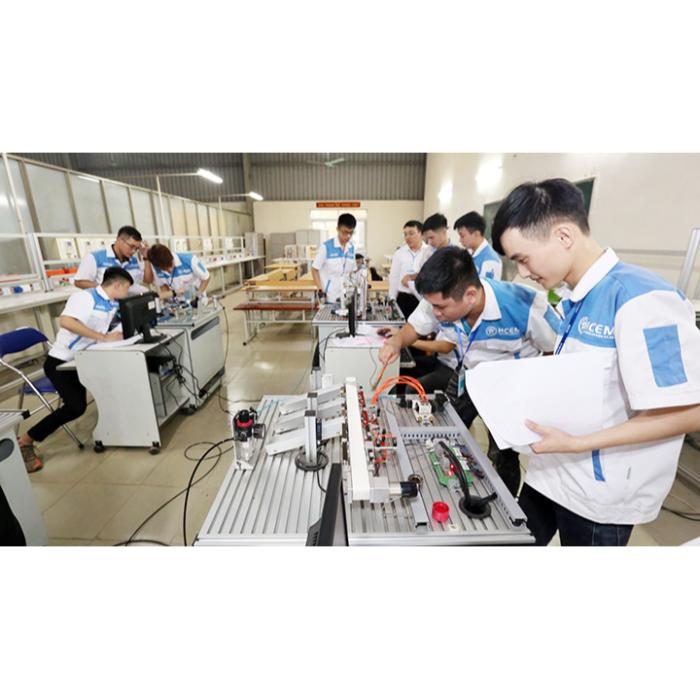
4.1. Flexible pathways: study and work simultaneously (Japan, South Korea)
This option suits students who wish to gain early work experience while continuing their education.
-
Japan: Offers a well-structured system for international students, with clear progression from language study to employment, particularly in technical, construction, and caregiving sectors.
-
South Korea: Suitable for vocational or language programmes, with a relatively familiar environment, though visa requirements can be more stringent.
Key advantages include:
-
Moderate entry requirements
-
Opportunities to earn while studying
-
A gradual transition into long-term employment

4.2. Sustainable pathways: vocational training with long-term prospects (Germany)
Germany has become an increasingly strategic destination for students seeking long-term career stability.
Popular fields include:
-
Nursing
-
Hospitality
-
Mechanical and technical trades
Notable advantages:
-
Low or subsidised tuition fees
-
Paid vocational training
-
Clear pathways to long-term employment
However, this pathway requires serious preparation, particularly:
-
German language proficiency (typically B1 or above)
-
Strong discipline and commitment
5. A changing labour market: beyond academic degrees
An important reality is that labour markets in countries such as Japan, South Korea, and Germany are increasingly shifting towards practical competence.
-
Academic degrees are no longer the sole criterion
-
Practical skills and adaptability are highly valued
-
Employers prioritise candidates who can contribute immediately
This shift creates meaningful opportunities for students who may not follow traditional academic routes but are willing to invest in the right skills.
6. Choosing what fits, rather than what seems safe
When faced with multiple options, the goal is not to choose the easiest path, but the most suitable one.
You may start by asking:
-
Am I suited to long-term academic study?
-
Do I prefer early employment or long-term investment in education?
-
What level of financial support is available?
From there, your direction becomes clearer:
-
For early income and flexibility: Japan may be a practical option
-
For long-term stability: Germany is worth considering
-
For a cautious start: domestic options can serve as a stepping stone
The key is to avoid decisions driven purely by external pressure or trends.
7. A balanced perspective for confident decisions
Average academic performance is not a limitation—it is simply a different starting point.
With the right direction:
-
You can thrive in a suitable environment
-
Build a stable career
-
And grow in your own way
What ultimately matters is not where you begin, but how well you understand yourself and the path you choose moving forward.
FOR MORE DETAILS OF OUR STUDY ABROAD AND WORKING OVERSEAS PROGRAM, PLEASE CONTACT:
TOHOKU SONG DA JOINT STOCK COMPANY
Address: No. 4, Alley 180 Thai Thinh, Dong Da Ward, Hanoi, Vietnam
Hotline: 0989044852
Email: tohokusongda2014@gmail.com