


For anyone planning to work in Japan as a Technical Intern Trainee, Specified Skilled Worker, Engineer, or other professional, a CV (Rirekisho) is much more than a summary of personal information. It is the employer's first impression of you.
Japanese employers pay close attention not only to your education and work experience but also to your honesty, attention to detail, and professional attitude. A well-prepared CV can significantly improve your chances of being invited for an interview.
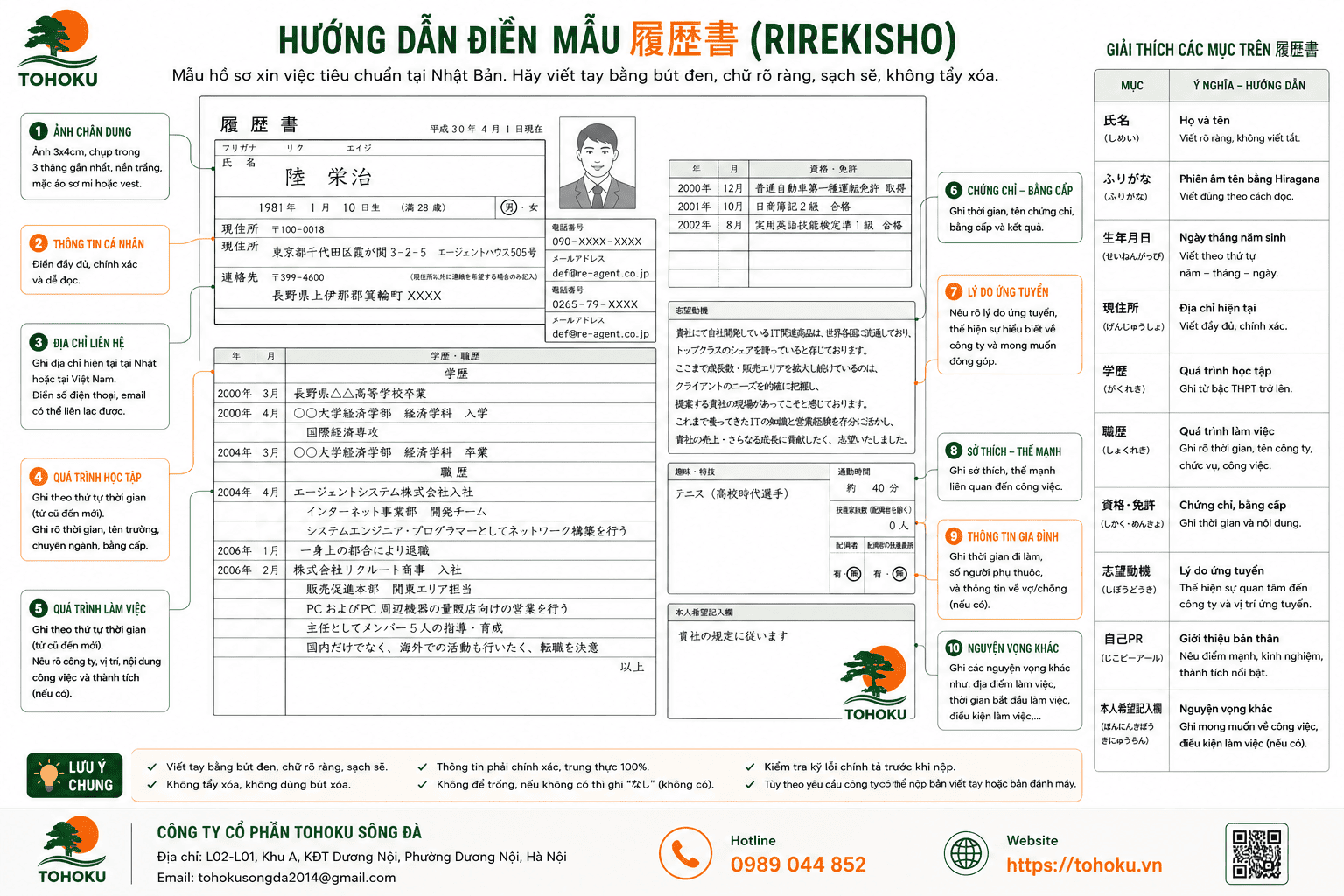
Below are ten essential steps to help you prepare a professional CV for Japanese employers.
1. Provide Accurate Personal Information
Your CV should include the following details accurately:
-
Full name
-
Date of birth
-
Current address
-
Telephone number
-
Email address
Use a professional email address, such as:
Avoid informal email addresses that may create an unprofessional impression.
2. Use a Professional Passport-Style Photograph
Your photograph is one of the first things recruiters notice.
A suitable photo should:
-
Be taken within the last three months.
-
Have a plain white or light blue background.
-
Show you wearing formal business attire.
-
Present a neat hairstyle.
-
Face the camera directly.
-
Not be heavily edited or taken as a selfie.
A clean, professional photograph demonstrates respect for the recruitment process.
3. List Your Educational Background Chronologically
Include:
-
Date of enrolment
-
Date of graduation
-
Name of the institution
-
Major or field of study
Present your educational history in chronological order and be prepared to explain any significant gaps if necessary.
4. Describe Your Work Experience Clearly
Instead of simply writing:
Production Worker
Provide specific details such as:
-
Operating CNC machinery
-
Conducting quality inspections
-
Reading technical drawings
-
Working according to the 5S methodology
-
Participating in Kaizen improvement activities
-
Training new employees
-
Supporting production process improvements
Japanese employers want to understand what you actually did, not just where you worked.
5. State Your Japanese Language Proficiency Honestly
List recognised language qualifications, for example:
-
JLPT N5
-
JLPT N4
-
JLPT N3
-
JFT-Basic
-
NAT-Test
Do not exaggerate your language ability. Honesty is highly valued in Japanese recruitment.
6. Include Relevant Qualifications and Skills
Mention certificates and technical skills related to the position, such as:
-
Welding
-
Electrical work
-
Forklift operation
-
Crane operation
-
Machinery operation
-
AutoCAD
-
SolidWorks
-
Microsoft Office
If you have completed occupational safety or quality management training, include these as well.
7. Write a Meaningful Reason for Applying (志望動機)
Many applicants write very general statements.
Instead of writing:
"I want to work in Japan to earn a higher income."
A stronger example would be:
"I would like to work in Japan to improve my professional skills, learn advanced quality management systems, and build a long-term career while contributing to the company's success."
Japanese employers appreciate applicants who demonstrate clear career goals and genuine interest in the company.
8. Write an Effective Self-Introduction (自己PR)
The Self-PR section allows you to highlight your strengths.
A recommended structure is:
-
Introduce your key strength.
-
Provide a real example.
-
Explain what you learned.
-
Describe how you will apply this strength in the new position.
For example:
"My greatest strength is teamwork. During my previous employment in a manufacturing workshop, I regularly worked with colleagues to complete urgent production orders on schedule. Through this experience, I developed strong communication skills, responsibility, and the ability to solve problems under pressure. I look forward to applying these strengths to contribute effectively to your company."
9. Tailor Your CV for Each Company
One of the most common mistakes is sending the same CV to every employer.
Adjust the following sections according to each position:
-
Reason for applying
-
Career objectives
-
Key strengths
-
Professional skills
A personalised CV demonstrates genuine interest in the company and the role.
10. Be Honest at All Times
Never provide false information regarding:
-
Work experience
-
Educational background
-
Professional qualifications
-
Japanese language proficiency
Japanese employers often verify the information provided during interviews. Any dishonest statement may result in immediate rejection, regardless of your qualifications.
Additional Experience Worth Highlighting
If you have experience in any of the following areas, be sure to include it:
-
Team leader or group leader
-
Training new employees
-
Participation in 5S activities
-
Kaizen improvement initiatives
-
Productivity awards
-
Occupational safety awards
-
Process improvement suggestions
These experiences demonstrate leadership, responsibility, teamwork, and a commitment to continuous improvement—qualities highly valued by Japanese companies.
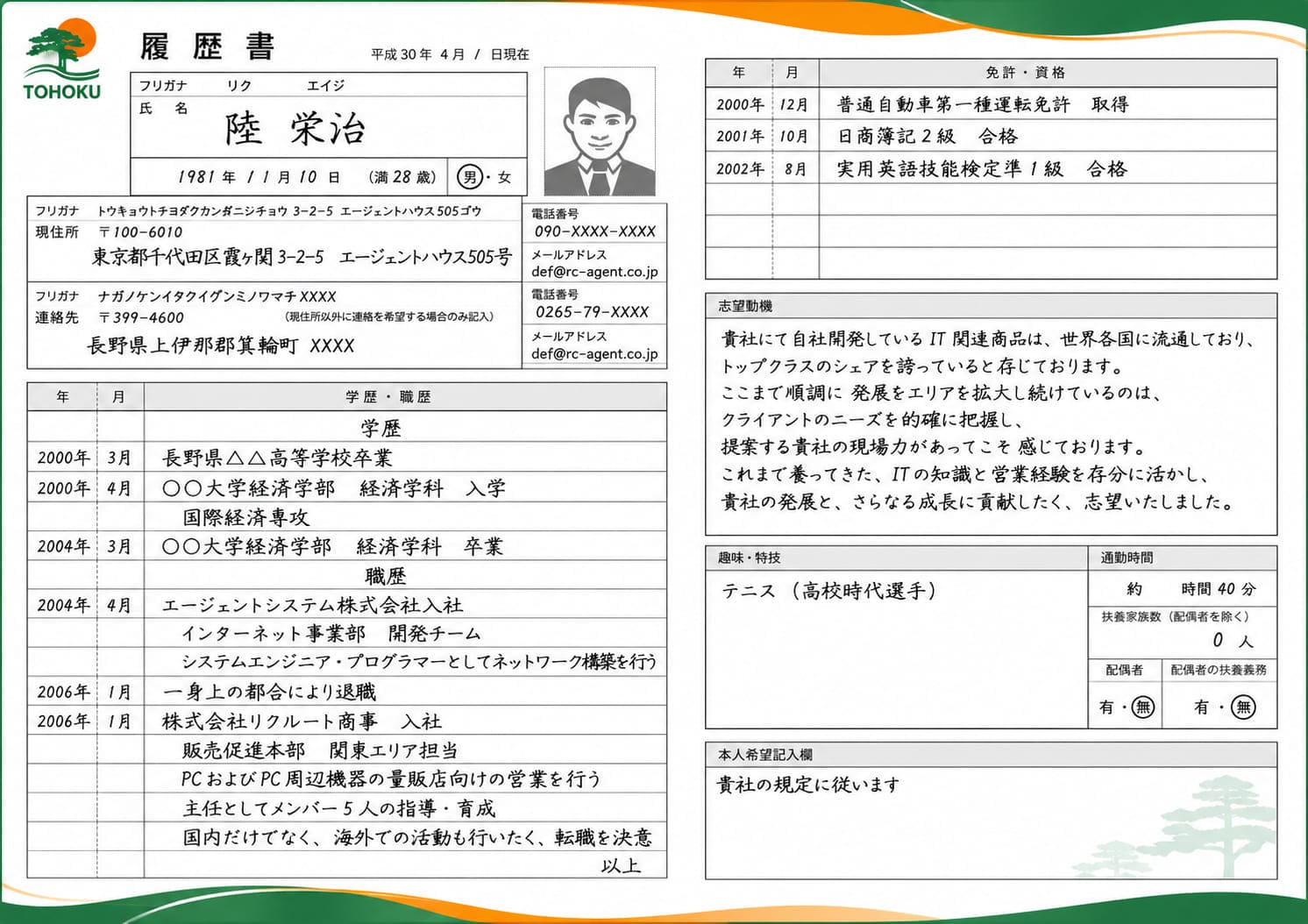
Common Mistakes When Writing a CV
Avoid these common errors:
-
Spelling and grammar mistakes
-
Unprofessional email address
-
Missing contact information
-
Inappropriate photograph
-
Inconsistent dates
-
Vague job descriptions
-
Excessively long CVs with little useful information
-
Poor layout and formatting
-
False or exaggerated information
Understanding Common Sections of a Japanese Rirekisho
| Japanese | English |
|---|---|
| 氏名 | Full Name |
| ふりがな | Phonetic Reading (Furigana) |
| 生年月日 | Date of Birth |
| 現住所 | Current Address |
| 学歴 | Educational Background |
| 職歴 | Employment History |
| 免許・資格 | Licences and Qualifications |
| 志望動機 | Reason for Applying |
| 自己PR | Self-Promotion / Personal Strengths |
| 本人希望記入欄 | Additional Requests or Preferences |
Conclusion
A strong Japanese CV does not need to be visually elaborate. Instead, it should demonstrate accuracy, honesty, professionalism, and attention to detail.
Every section of your CV reflects your attitude towards work. Taking the time to prepare a clear and well-organised Rirekisho will help you make a positive first impression and increase your chances of securing an interview with a Japanese employer.
Whether you are applying as a Technical Intern Trainee, Specified Skilled Worker, Engineer, or international student seeking employment in Japan, investing effort in your CV is an important first step towards achieving your career goals.
FOR FURTHER INFORMATION, PLEASE CONTACT
SONG DA TOHOKU JOINT STOCK COMPANY
Address: L02-L01, Area A, Duong Noi Urban Area, Duong Noi Ward, Hanoi, Vietnam
Hotline: (+84) 989 044 852
Email: tohokusongda2014@gmail.com
Website: https://tohoku.vn