


When first arriving in South Korea, many international students focus mainly on tuition fees and accommodation without carefully planning their daily expenses. Food, transport, shopping, mobile phone bills and small everyday purchases can quickly increase monthly living costs if they are not managed carefully.
Here are five simple ways for international students to save money in their daily lives.
-
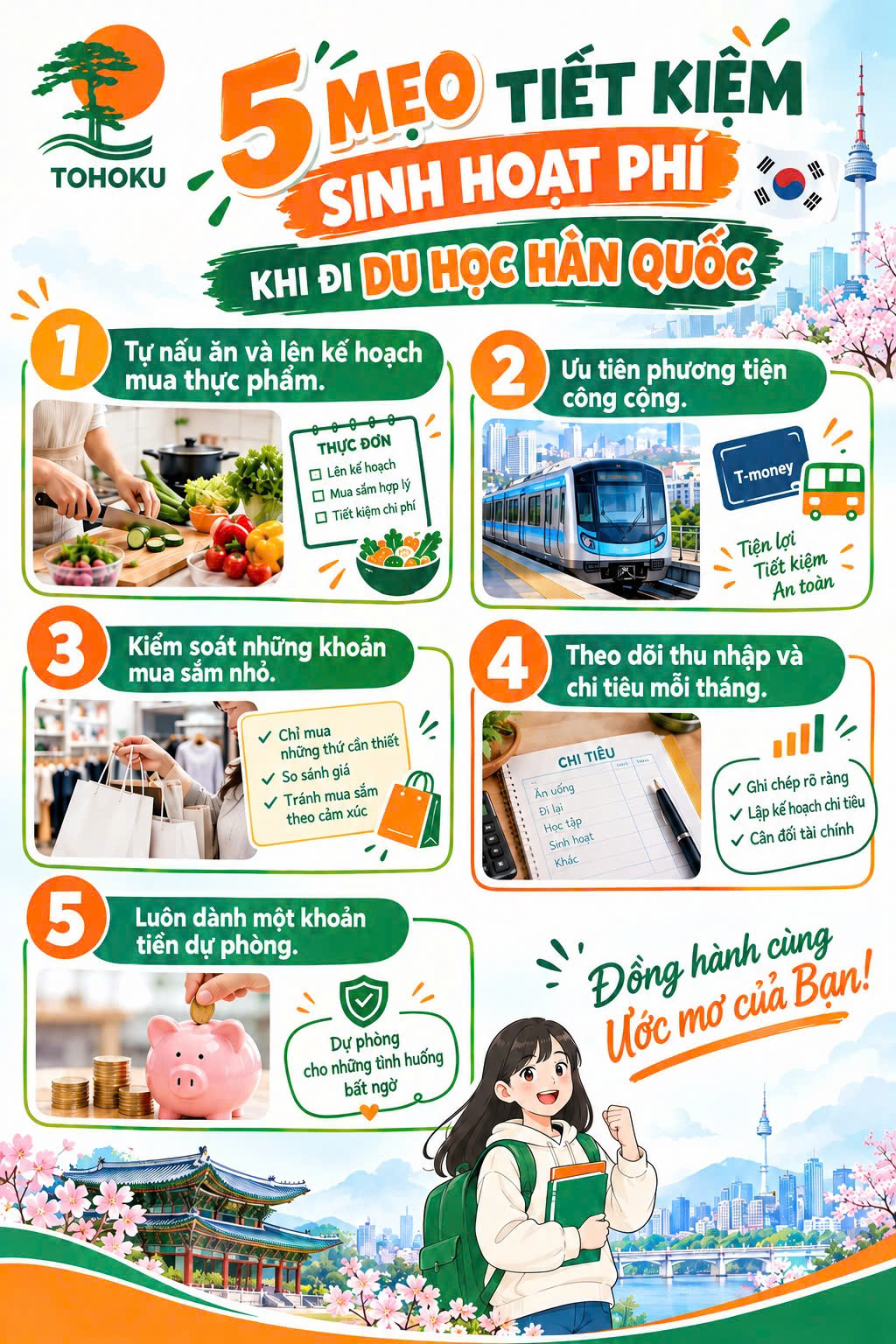
Cook at home and plan your food shopping
Eating out regularly can significantly increase living expenses. If your accommodation has a kitchen, preparing some meals at home can help reduce food costs.
Some simple ways to save include:
-
Plan your meals before going shopping
-
Buy only what you need for a few days
-
Cook several portions at once and use them for multiple meals
-
Bring homemade food to class when possible
-
Avoid buying drinks and snacks out of habit
There is no need to completely cut out your favourite foods. The key is to reduce unnecessary spending.
Read more: What Can Vietnamese International Students Eat in South Korea on a Budget?
-
Use public transport whenever possible
Taxis are convenient, but using them regularly can become a significant monthly expense.
For familiar journeys such as travelling to university, a part-time job or shops, international students should prioritise buses and trains.
Before travelling, check the route and journey time so that you can choose the most suitable option. Reducing unnecessary taxi journeys can help lower monthly transport costs.
-
Keep track of small purchases
A cup of coffee, a snack, a drink bought on the way to class or a food delivery may not seem expensive individually. However, when these expenses are repeated every day, they can add up to a significant amount over a month.
Students can set a separate monthly budget for coffee, snacks and entertainment. Once this budget has been used, try to avoid taking money from essential expenses.
For clothes, cosmetics and personal items, ask yourself before buying:
“Do I really need this?”
If it is not urgent, wait a few days before making the purchase. This can help prevent impulse buying.
-
Track your income and spending each month
One of the most effective ways to save money is to understand where your money is going.
Students can divide their spending into four main categories:
-
Rent and fixed expenses
-
Food and daily living expenses
-
Transport and mobile phone costs
-
Personal spending and entertainment
At the end of each week or month, review how much you have spent. If you notice that one expense has increased significantly, you can adjust your budget for the following month.
In particular, do not assume that earning money from a part-time job automatically means you can increase your spending.
Read more: Is Income from Part-Time Work Enough to Cover the Living Expenses of International Students in South Korea?
-
Always keep an emergency fund
Try not to spend all the money in your account on daily expenses.
An emergency fund can be useful if you become ill, need to buy something unexpectedly, have additional study-related expenses or face an unforeseen situation.
If you earn money from a part-time job, consider putting part of your income into your emergency fund rather than spending it all on personal expenses.
Read more: What Part-Time Jobs Do International Students in South Korea Commonly Do?
Saving does not mean living too restrictively
The goal of saving on living expenses is not to cut every expense, but to prioritise what is genuinely necessary.
When first arriving in South Korea, international students should develop the habit of tracking their spending from the first month. Over time, it will become easier to identify fixed expenses and areas where money can be saved.
Good financial management can also help students become more independent, reduce financial pressure and avoid having to ask their families for additional money at the end of the month.
CONTACT INFORMATION
Songda Tohoku Joint Stock Company
Address: L02-L01, Area A, Duong Noi Urban Area, Duong Noi Ward, Hanoi, Vietnam
Hotline: 0989 044 852 / 0989044852
Email: tohokusongda2014@gmail.com
Website: https://tohoku.vn