


Many young people believe that before going to Japan, working hard and studying diligently are all that matter. In reality, that is not enough.
It is equally important to understand and comply with Japanese law in every aspect of daily life, even in the smallest actions. Some behaviours that may be considered perfectly normal in Vietnam can result in police involvement, legal penalties, and even affect your residence status or your future study and employment opportunities in Japan.
Below are two real-life situations that every international student and technical intern trainee should remember.
Story 1: One Moment of Anger
A young couple had an argument.
The girlfriend returned to her dormitory, locked the door, and refused to see her boyfriend. Instead of calming down and resolving the situation peacefully, the boyfriend broke the dormitory window to get inside.
The dormitory staff immediately called the police.
Many people might see this as nothing more than a personal relationship issue. However, under Japanese law, damaging another person's property may constitute a criminal offence and can be dealt with according to the law.
Just one moment of losing self-control can lead to police involvement and serious consequences for someone studying or working in Japan.
Story 2: Borrowing a Bicycle Must Also Follow the Rules
Two female students were riding together on a single bicycle.
While they were travelling, the police stopped them because carrying two people on one bicycle violated local traffic regulations.
During the inspection, the police checked the bicycle's registration and discovered that it had previously been reported as stolen.
The two students simply believed they had borrowed the bicycle from someone they knew.
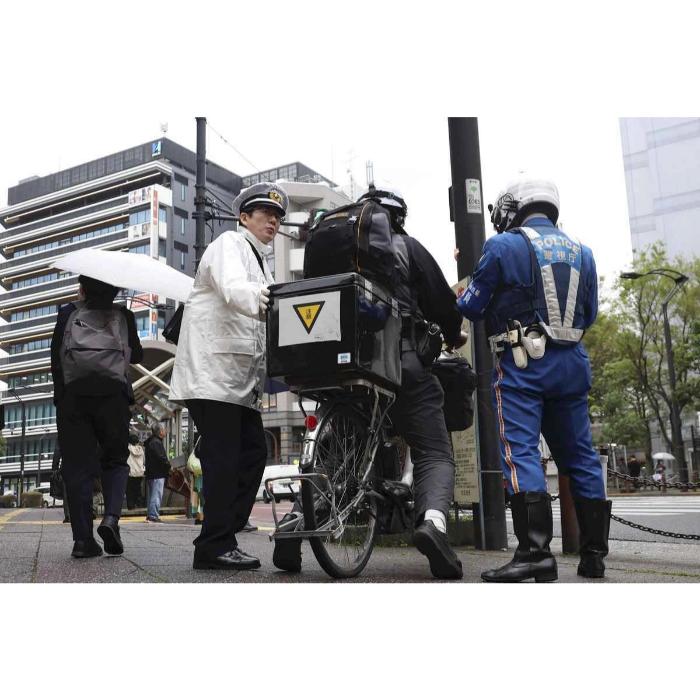
(Illustrative image)
In Vietnam, borrowing a bicycle or other belongings from friends or relatives is quite common. In Japan, however, anyone using someone else's property should be able to clearly explain its ownership and origin.
Otherwise, you may be detained for questioning and face unnecessary legal complications, even if you had absolutely no intention of breaking the law.
Most Problems Are Not Caused by Criminal Intent
The majority of Vietnamese people who encounter legal problems in Japan did not intend to commit a crime.
More often, the reasons are:
-
Thinking, "It's only a small matter."
-
Believing, "Everyone does this in Vietnam."
-
Failing to learn the local laws and regulations before taking action.
These attitudes are what often lead people into trouble and may result in serious consequences.
The law does not judge whether you personally consider something important or insignificant. It judges whether your actions comply with the law.
"When in Rome, Do as the Romans Do" Is More Than Just a Saying
When living in Japan, you represent not only yourself but also the image of Vietnamese people.
For that reason, every international student and technical intern trainee should remember to:
-
Never use someone else's property unless you clearly know its origin and have the owner's permission.
-
Strictly follow all traffic regulations, even those that may seem minor.
-
Never resolve conflicts through anger or impulsive actions.
-
If you are unsure whether something is allowed, ask your school, supervising organisation, management company, or responsible staff member before taking action.
The Right Decision Today Protects Your Future
Going to Japan is not only about learning a new language or acquiring professional skills. It is also about learning how to live in a society where the rule of law is respected.
Never think:
"It's just a small thing. It doesn't matter."
In reality, it is often these "small things" that cause people to lose money, time, educational opportunities, employment opportunities, and in some cases even affect their residence status.
Always Remember
Obeying the law is not simply about avoiding punishment. It is the best way to protect yourself, show respect for the country that welcomes you, and contribute to a positive image of Vietnamese people living, studying, and working in Japan.